Welcome back, Jack here.
This is Modern Monastery: your guide to contemplative practice. We connect you to traditions we trust and host events to practice together.
Read time: 5 mins (+ 3 mins 46 secs for Q&A)
I sprained my ankle meditating…

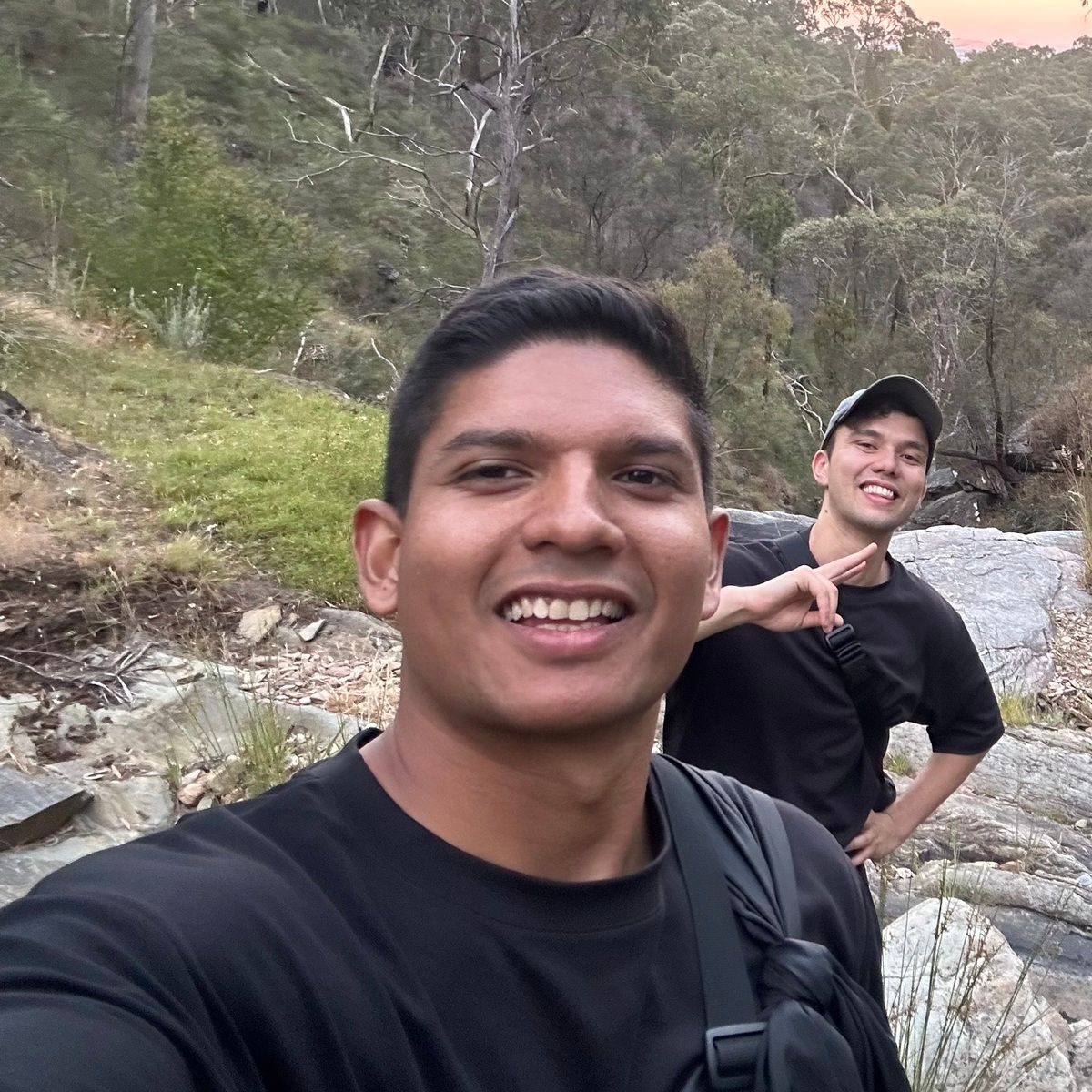
1 hour into a hike in the forest, I stepped in a rock that caved under me. Another rock landed directly on my left ankle. Took me about 1.5 hours to crawl back 😂.
Thankfully it happened on the second last day and didn’t impact my retreat too much.
Anyways, below is a write up of my full experience - hope you enjoy!
P.S. Thanks for all your questions! I’ve included answers to those at the end.
What was this retreat?
9 days of silent meditation in the Coromandel Peninsula, New Zealand.
Our days would begin with a 5:45am wake up, followed by our first session of meditation at 6:15am. As the sun came up, you could hear the forest come alive. A slow crescendo of cicadas, birds and insects.

sunrise at Te Moata
We had 3 amazing vegan meals per day, and would each do 1 hour of mindful work after breakfast (I chose gardening). The remaining time was spent in sitting meditation, walking meditation and teacher sessions (talks, instructions or Q&A).
Main Takeaways
This is the world’s greatest secret, and the most important thing I have ever learnt
Every time I go on retreat, I am reminded of what I think is the world's greatest secret. Everyone has heard it before, and it’s kind of a cliché.
There is so much happiness to be found in each moment.
It’s one thing to hear this, but it’s another thing to feel it in such an overwhelming way. And what makes it even more of a miracle is that it can be trained. Step by step. And anyone can learn it. I have a glimpse of this every time I go on retreat, but the felt experience often fades into intellectual understanding.
Practice Practice Practice
Practice is a daily reminder of the insights that I have had on retreat. It is what allows me to maintain the insight as an experience rather than an intellectual understanding.
My focus now is going to be on reducing the time I spend reading books, or listening to podcasts, and reinvesting that time into practice. Especially practicing in a community, and with a teacher.
I am a complete beginner
It’s been 2 years since my last silent retreat, and I haven’t maintained a regular sitting practice since. So this experience was very humbling as I felt like I was starting from 0. I’m looking forward to going much deeper this year.
Suffering = Pain x Resistance
Similar to previous retreats, I was able to experience my suffering fade away as I practiced letting go of resistance. It’s one of the most fundamental insight in Buddhism, that suffering is an unnecessary affliction that can be resolved.
Mindfulness means to ‘Remember’
The pali word for mindfulness, Sati, is actually better translated as ““to Remember” or “to Recollect”. This is a much clearer view of what mindfulness actually is. It’s not about avoiding distraction, it’s about coming back when you notice you’re lost.
Relaxed Diligence
Our teachers introduced a concept that unlocked the second half of my retreat: Relaxed Diligence. Rather than pushing through intense rounds of sitting, the aim is to maintain a gentle, steady awareness throughout every part of the day - eating, walking, gardening, lying in bed. This gave me permission to stop striving, and things started to open up.
I have been programmed to worship thinking
In order to succeed in school and at work, I have always focussed on sharpening my intellect. The problem for me is that sharpening my intellect has also sharpened my anxiety. In this retreat, this became a barrier rather than a benefit.
The idea that the intellect alone could be a reliable guide to truth is a relatively new concept, but it drives the world we now live in. Other cultures in the past have balanced this out with other sources of ‘knowing’.
The intuitive mind is a sacred gift and the rational mind is a faithful servant. We have created a society that honors the servant and has forgotten the gift.
I can’t help but think about the implications of this. A society lost in thought will always be unhappy. Unhappy people tend to spread their unhappiness with everyone else.
The retreat centre had a framed letter from a Native American chief and it really encapsulated what I was feeling. The letter has been described as the most profound statement on the environment ever made. It was a glimpse into a view of the world from a culture that balances the head with the heart. Read the full letter here.
Benefits
This retreat brought me a tonne of benefits. These changes are very pronounced in the days following a retreat, but can fade quite quickly. Daily practice and proper integration is what keeps it alive.
Body
Tension → Pleasure: my usual headaches, tight shoulders and a clenched jaw disappeared in about 2 days. And by the end it was replaced with this buzz of pleasure in my entire body.
Sleep & Energy: my energy levels, sleep quality and time to sleep have improved dramatically. These are things I have struggled with for most of my life.
Cravings: you know that feeling of ease when you sip that first cup of coffee in the morning? Well, it felt like I was able to access that feeling without having to make the coffee. It’s like I was able to relieve the desire without having to act on it.
Mind
Inner Dialogue: by the end of the retreat, I had an extreme level of focus. I could catch when I was lost in thought. My inner dialogue was much quieter and more compassionate.
Creativity: I always get a huge burst of creativity when I go into silence. This time I came home with great ideas, but I spent much less time thinking about them. I realised that I don’t need to spend so much time planning these ideas in my head. Most of that is fantasy disguised as creative thought.
Anxiety → Clarity: for a long time, anxiety has impacted my mental clarity, attention and memory. This retreat taught me how to feel anxiety in my body, before it gets into my head. I am more able to break the spiral before it starts to spin.
What hasn’t changed
I don’t want to make it seem like this retreat fixed everything for me - it didn’t. Writing this sentence 5 days later, I almost feel normal again. More than how it makes me feel, these retreats are a reminder that all of these benefits are possible with practice.
Would I recommend this retreat?
100% yes.
If you are starting out, I would recommend a 7-10 day retreat in this tradition. There is more psychological safety built in, which makes me less worried about someone having a breakdown during a retreat.
Below is a short comparison of the Goenka style vs. Insight, for anyone trying to decide between the two.
Goenka
Free / Donation Based
Globally Accessible
Teachings are reliable/consistent (video recordings)
Insight
Cost of logistics + Donation
Broader range of teachings
Live teacher + better Q&A
Less goal oriented, more compassionate
Better integration with everyday life
If you want a more intense, militant vibe, or if you want to reduce your costs - Goenka/Dhamma is still an option. I would just be extra careful to check that you are psychologically fit enough to do it.
Q&A
Thanks again for your questions!
How are you feeling after 9 days into silence? What’s one actionable thing you’re going to do differently following the silent retreat?
I’m feeling great.
One actionable thing: meditate more.
In recent years I have focussed more on cultivating my environment to live a mindful life (e.g. leaving tech). But I got really lazy with actually practicing mindfulness / meditation.
Did you miss talking / speaking?
Not really. The silence is not too difficult actually, it’s the meditation that’s hard.
Do you find the silence easy? Personally it sounds like a dream! But wondering if I'm a bit naivé to it all. I'm sure it's more than just being silent too - does the focus required take a mental toll, especially if you're new to an extended practice?
The focus takes a huge mental toll. The first couple of days were quite tough in that respect, but it gets easier and easier. And after those couple days, beautiful moments began to emerge.
It’s like going to the gym, but for mental fitness and emotional wellbeing.
How was this experience versus the first 10 day silent retreat you did? You said the first one was genuinely life changing.
If this was my first retreat, it would be life changing! Since it was my second silent one, it was more a reminder of what I had already learnt. I did deepen my understanding though and I have a renewed motivation to keep practicing.
Does the time feel different? Do you feel like days go slower when you can’t talk?
Yes! The first couple days feel so long. And then they start to speed up. When you’re in it, the week feels like a month. And when you’re out, it feels like it was a couple of days. The whole thing feels like a dream.
Does not talking affect your sleep at all? Do you find during your retreat that you sleep any better/worse?
Most people report having crazy dreams. I had this basically every night. Extremely vivid dreams that you can’t turn off. I guess your mind starts creating stuff because it’s starved of stimulus. Last retreat I had trouble sleeping, but this one I woke up feeling rested most days.
I feel like talking is the anesthetic to emotions and so when my brain goes certain places I just go do something, call someone, idk actually do something “loud”. Do you feel like you can do that to your brain without the action of talking or you are incredibly vulnerable because you can’t escape your thoughts?
I feel ya. This is a super interesting question.
Reminds me of a quote I heard: “My mind is a dangerous neighborhood; I try not to go there alone” - Anne Lamott.
Short answer is that I think mindfulness can be one way to listen to yourself in the same way someone else would listen to you. Not to replace it, but to create more space.
Journalling or talking out loud can feel good because sometimes you realise that what you are stressing about is not actually that bad. I think this same process is possible with meditation. On top of that, addressing it at the root (in your body or mind) usually means it has gained less momentum and has taken up less of your energy.
When you take your phone after 7 days does it feel like a punch in your face, does it feel violent?
Yeah it’s like picking up radioactive waste 😂
Did the thought about what you are going to write come up often or nah?
What do you seek currently when you attend a retreat?
Basically everything I could possibly do when I got out, presented itself as a distraction.
Ironically I would often get distracted mid-meditation, fantasising about how much I want to meditate when I get home.
What I’m seeking currently on retreat these days is two fold:
Finding the best retreat formats for this community
Deepening my practice in order to live a better life
At a silent retreat do you seek silence in your mind or the opposite, deep thinking?
Neither actually!
There are techniques that aim to quiet the mind by focussing on an object. But for the most part, the goal is to be aware of everything you are experiencing without trying to change it.
When you first talk again are you so mindful of the words you use?
When you first talk again, it’s tricky to get your words right. I think you speak way more from the heart, and you don’t ‘think through’ what you are going to say as much. You are just sharing what you feel in the moment, no filter. Because you have cultivated so much joy and love over a week, the conversations are very pleasant.
You are already so deliberate and sparing with your words, do you think that's partly due to this practice or just naturally who you are?
I think I am anxious about what to say actually! The practice will probably allow me to be more embodied and less in my head, which I think will make me talk more.
Did you end up thinking more about the future - or the past?
Definitely the future, I’m a planner.
Ultimately the idea is to let go of both.
That’s a wrap
Feel free to email me any other questions you have!
If you got this far, I love you.
See you soon.
Jack